In the fields of warehousing, logistics, and industrial material handling, electric forklifts are no longer synonymous with "lightweight" capabilities. Thanks to continuous breakthroughs in motor technology, electronic control systems, and battery performance, the lifting capacity of electric forklifts now spans a wide range—from 1 ton to 10 tons—enabling them to compete head-to-head with internal combustion forklifts in medium-to-heavy-duty applications.
So, just how heavy a load can an electric forklift handle? The answer depends on the tonnage class you choose; electric forklifts now offer a comprehensive product lineup, ranging from agile 1.2-ton three-wheel models to massive, high-tonnage units capable of handling 10-ton loads. Drawing on the specifications of our full range of electric forklifts, this article outlines the ideal use cases for each tonnage class to help you find the perfect match for your needs.
I. Micro and Light-Duty Series (1.2 Tons – 2 Tons) – Agile Performers for Tight Spaces and Light Loads
While this category represents the "entry-level" tier of electric forklifts, it certainly does not imply low-end quality. Their core strengths lie in compact dimensions and exceptionally tight turning radii, making them ideal for maneuvering between warehouse racking and operating inside elevators or narrow aisles.
Representative models include three-wheel forklifts (CPDS12/16/20) and short-wheelbase forklifts (CPD12/16/20). Take the CPDS12 three-wheel model, for instance: with a turning radius of just 1,590 mm and an overall width of only 1,100 mm, it is the most agile model in our lineup. Meanwhile, the short-wheelbase series features a wheelbase compressed to 990 mm (CPD12) and an overall length of just 2,710 mm—a footprint comparable to that of a small SUV—yet it is fully capable of handling a rated lifting capacity of 1.2 tons. Ideal Application Scenarios:
Urban distribution centers, supermarket warehouses, and cold chain logistics
Inter-floor transport in multi-level warehouses
Operations requiring frequent entry/exit through elevators or narrow doorways
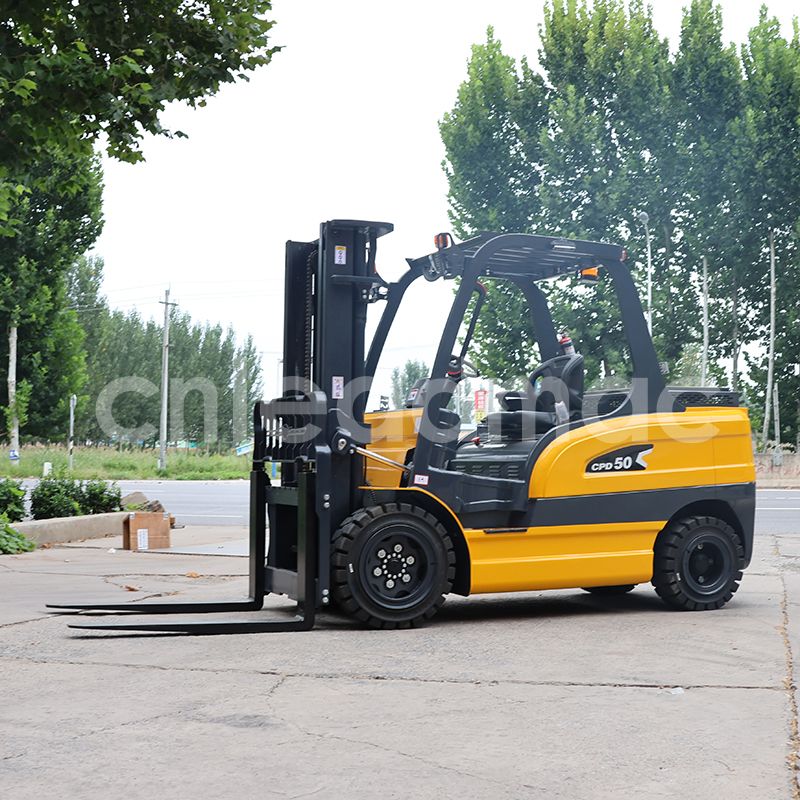
II. Mid-Range Core Series (2.5t–3.5t) — The "Golden Tonnage" for General Operations
The 2.5t to 3.5t range represents the segment with the highest market demand and serves as the primary battleground where electric forklifts compete directly with diesel models. In this category, electric forklifts have achieved full maturity in terms of power output and runtime, easily meeting the daily material handling needs of most manufacturing enterprises and logistics parks.
Take the CPD25Z as an example: it features a 72V/260Ah battery system, a fully loaded travel speed of 11 km/h, and a maximum gradeability of 15%. Building on this foundation, the CPD30A and CPD35Z models offer enhanced drive motor power (10kW drive + 12kW lift) and an increased chassis width of 1230mm, resulting in significantly improved stability. Notably, different wheelbase options are available within the same tonnage class—for instance, the CPD30A offers a choice between 1740mm and 1860mm wheelbases; the former provides greater maneuverability, while the latter offers superior load stability, allowing customers to select the best fit based on aisle width and operational habits.
Ideal Application Scenarios:
Transport of raw materials and finished goods in manufacturing workshops
Container loading and unloading at logistics distribution centers
Pallet stacking in outdoor storage yards
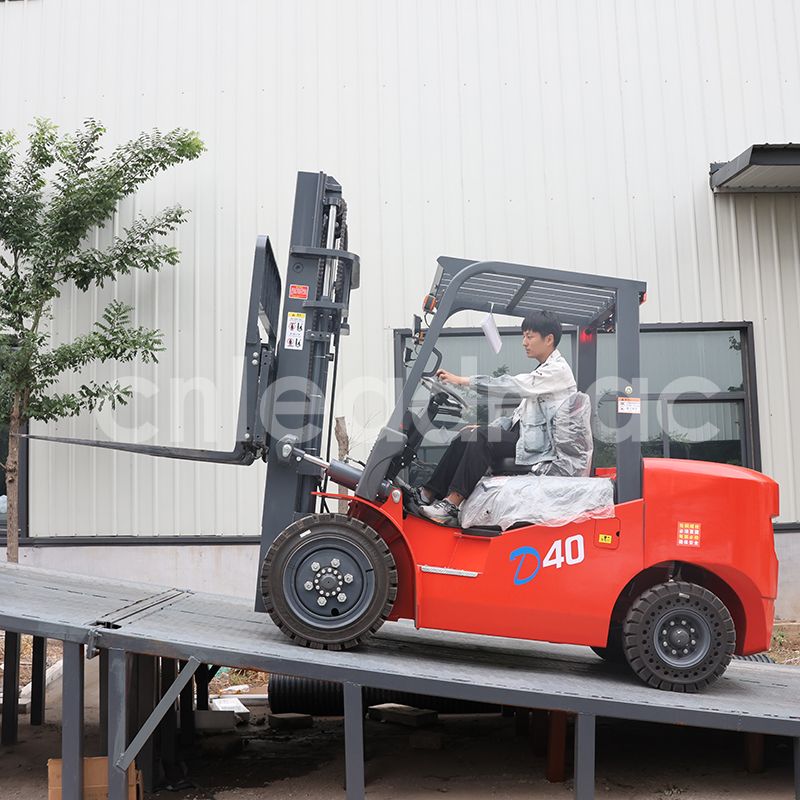
III. Heavy-Duty Series (4t–5t) — Proof of Electric Forklifts' Capability in Heavy-Load Operations
In the past, heavy-duty operations exceeding 4 tons were almost exclusively the domain of diesel forklifts. However, with the widespread adoption of 80V high-voltage platforms and high-capacity batteries (400Ah lead-acid or 300Ah lithium-ion), electric forklifts can now deliver sustained power output comparable to diesel engines, thoroughly shattering the traditional perception that "electric equals light-duty."
The CPD40Z and CPD50Z are prime examples of this series. The former model features a rated lifting capacity of 4 tons and a load center of 600mm (a more demanding specification than the standard 500mm); it has a curb weight of 5,300kg and is powered by either an 80V/400Ah lead-acid battery or an 80V/300Ah lithium battery. The latter model increases the lifting capacity to 5 tons, boasting a drive motor power of 18kW, a lift motor power of 21kW, and a maximum travel speed of 13.5km/h. Both models share a vehicle width of 1,360mm and a minimum ground clearance of 160mm, ensuring excellent maneuverability and clearance even under heavy-load conditions.
Ideal Application Scenarios:
Handling castings and molds for heavy machinery manufacturers
Loading and unloading bulk cargo at ports and railway freight yards
Transporting coils and sheets in the paper and construction material industries
IV. Ultra-Heavy Series (7–10 Tons) — The "Top-Tier" of Electric Forklifts
Electric forklifts with capacities of 7, 8, or even 10 tons remain a relatively rare category in the industry, as they demand exceptional performance regarding chassis strength, hydraulic systems, thermal management, and battery discharge rates. Our CPD70Z, CPD80Z, and CPD100Z models are flagship products developed specifically to meet these "peak-of-the-pyramid" requirements.
Taking the CPD100Z as an example: it offers a rated lifting capacity of 10 tons, a curb weight of 13,200kg, and a wheelbase of 2,550mm. It is equipped with dual lift motors (25.4kW × 2) and large pneumatic tires (8.25-15 drive wheels), achieving a maximum travel speed of 15km/h. With the mast lowered, the height is 2,820mm; the ground clearance at the bottom of the fully loaded mast is 130mm, while the minimum vehicle ground clearance is 220mm—balancing heavy-load stability with the ability to navigate complex terrain. Additionally, the CPD70Z and CPD80Z utilize a four-wheel drive configuration (4x2 layout with four drive wheels), further enhancing traction for starting under heavy loads and driving on slopes. These three models share a uniform overall width of 2,000 mm—significantly wider than the medium-to-light series—and have turning radii ranging from 3,180 mm to 3,460 mm. This indicates they are primarily designed for operations in spacious environments, such as large steel mills, port terminals, mining warehouses, and heavy equipment assembly workshops.
Ideal Application Scenarios:
Handling ingots, billets, and profiles in the steel and non-ferrous metal industries
Transporting heavy equipment components, such as large wind turbine parts and transformers
Short-distance transfer of empty or loaded shipping containers
V. Model Selection Guide
With over ten models available—ranging from 1 to 10 tons—the core logic for selection is straightforward. We recommend a step-by-step narrowing-down process:
Step 1: Determine Tonnage
Identify the weight of the heaviest single load handled in daily operations and add a 10%–15% safety margin to determine the required rated lifting capacity.
Step 2: Assess Space
Measure the minimum aisle width and maximum turning radius constraints of the operating area. If aisles are narrow (under 3.5 meters), prioritize three-wheel or short-wheelbase models; for open yards, standard or even long-wheelbase models can be chosen to maximize stability.
Step 3: Verify Runtime
Estimate the duration of a single work shift. If it exceeds 6 hours, prioritize lithium-ion battery configurations (which support fast charging and opportunity charging) or opt for high-capacity battery solutions based on an 80V high-voltage platform.
Step 4: Consider Ground Conditions
If the operating area includes ramps (check if the 15% maximum gradeability is sufficient) or uneven surfaces (consider minimum ground clearance), the superior maneuverability and clearance of the heavy-duty series become distinct advantages.
Conclusion
Electric forklifts have long since moved beyond the stereotype of being limited to "light loads, indoor use, and short durations." From agile 1.2-ton three-wheel models to 10-ton heavy-duty giants, electric forklifts across various capacities can now meet almost all material handling needs in non-off-road environments. Ultimately, selecting the right model is not about choosing the "highest tonnage," but finding the optimal balance between capacity, space constraints, runtime, and cost. We recommend that enterprises compare four key factors—maximum unit weight, aisle width, shift duration, and floor conditions—against the specifications of the corresponding vehicle models prior to purchase. Whenever possible, arrange an on-site trial with a demo unit to verify actual operational efficiency and handling; after all, impressive figures on a spec sheet cannot match the practical value of smooth, intuitive operation.
The specifications in this document are based on our latest product technical manual. Actual configurations may vary depending on selected options; please refer to the formal quotation for specific details.
 SDLD Forklifts Ride China Expo
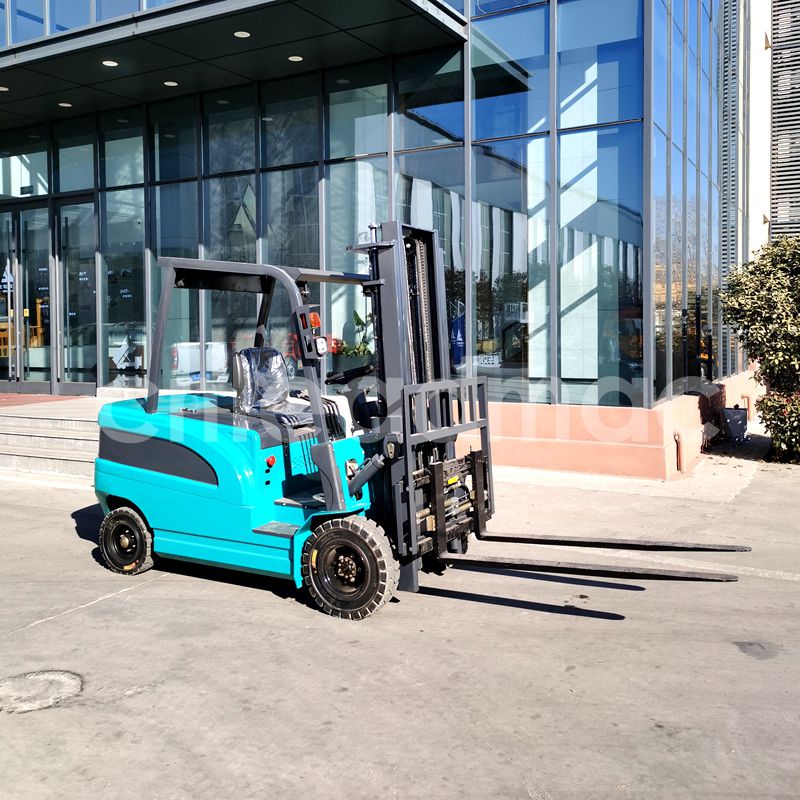 SDLD Shandong Leadmac Forklift
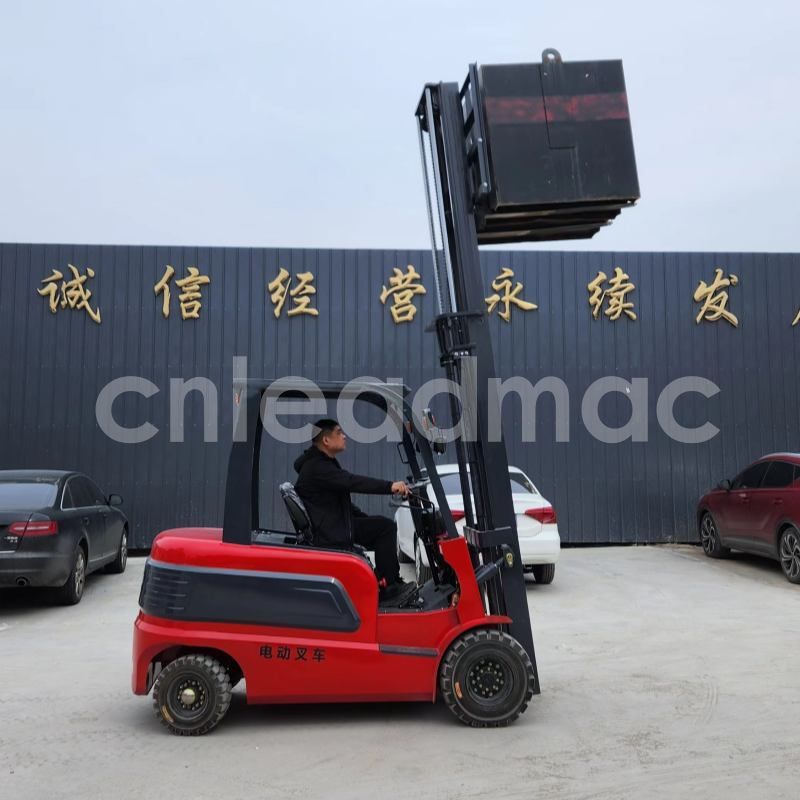 Shandong Leadmac SDLD Forklift
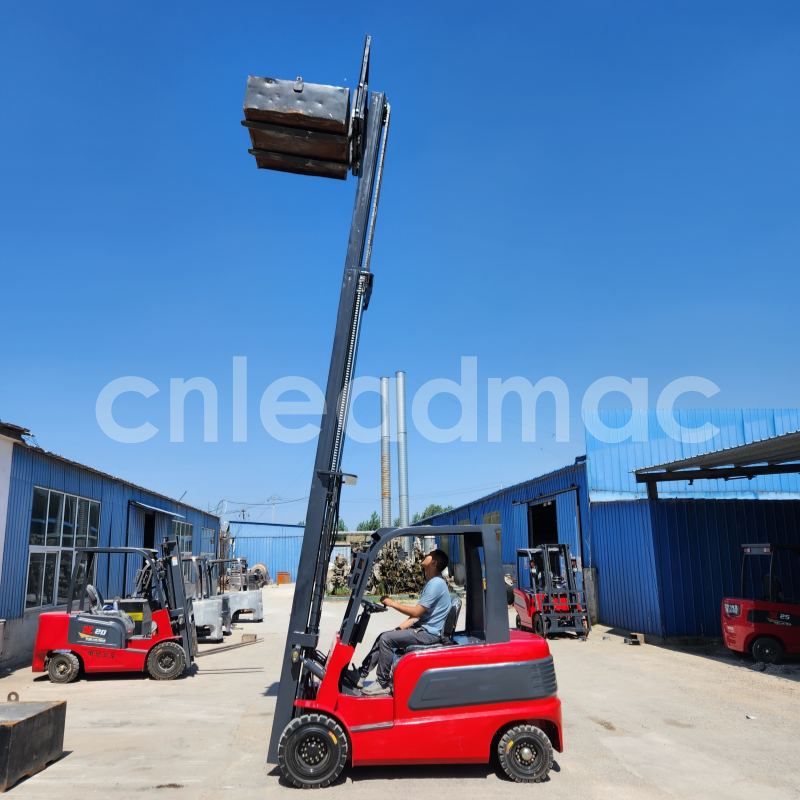 LEAD Forklift News – Electric,